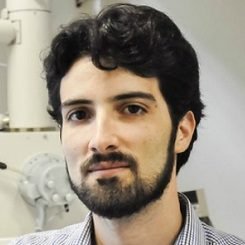
Amauri J. de Paula
Publicações
2026
Liu, Caihong; Xiong, Chi; Liang, Hai; Yang, Kun; Faria, Andreia F.; Yang, Liu; Paula, Amauri J.; Li, Hongtao; Song, Dan; He, Qiang; Ma, Jun
Membrane-based advanced oxidation processes for water and wastewater treatment: Advances, trade-offs, and challenges Journal Article
Em: Chemical Engineering Journal, vol. 542, 2026, ISSN: 1385-8947.
@article{Liu2026,

title = {Membrane-based advanced oxidation processes for water and wastewater treatment: Advances, trade-offs, and challenges},

author = {Caihong Liu and Chi Xiong and Hai Liang and Kun Yang and Andreia F. Faria and Liu Yang and Amauri J. Paula and Hongtao Li and Dan Song and Qiang He and Jun Ma},

doi = {10.1016/j.cej.2026.178098},

issn = {1385-8947},

year  = {2026},

date = {2026-08-15},

journal = {Chemical Engineering Journal},

volume = {542},

publisher = {Elsevier BV},

abstract = {Membrane technology coupled with advanced oxidation processes (AOPs) have attracted increasing attention in advanced water treatment. This review maps the field's evolution through a bibliometric analysis and a systematic assessment of 774 SCI-indexed publications (1982–2025). The findings reveal exponential growth in research output, with China as the leading contributor, and major advances driven by chemistry and materials science. Key research hotspots include desalination processes, modification of membrane materials, and the design of membrane reactors. Integrated technologies are categorized into three types based on their radical generation mechanism: membrane-coupled electrochemical AOPs (EAOPs), membrane-coupled photocatalytic oxidation (PCO), and membrane-coupled chemical oxidant-driven AOPs (e.g., Fenton, ozone, or persulfate-coupled processes). The review systematically discusses relevant research process in each category, membrane types and functional roles, fouling control and secondary pollution, as well as reactor design and practical considerations. EAOPs and PCO exploit synergies between separation and oxidation to enhance pollutant removal and enable self-cleaning, albeit remain limited by energy costs and light-harvesting efficiency. Chemical-drive strategies are generally more energy efficient, but faces issues related to oxidant stability and by-product formation. A clear trade-off emerges: EAOPs and PCO systems are more effective against refractory pollutants but are costlier, whereas chemical-driven systems are more economical but limited by oxidant efficiency. Finally, future research directions are proposed as a valuable reference for the sustainable development of this field.},

keywords = {},

pubstate = {published},

tppubtype = {article}

}
Santos, Arthur Silva Sousa; Stojanovska, Elena; Alves, Antonio Augusto; Paula, Amauri Jardim; Florio, Daniel Zanetti; Almeida, James Moraes
Rational Design of Single-Phase High-Entropy Oxides via Large Language Model Data Mining and Explainable Machine Learning Journal Article
Em: J. Chem. Inf. Model., 2026, ISSN: 1549-960X.
@article{daSilvaSousaSantos2026,

title = {Rational Design of Single-Phase High-Entropy Oxides via Large Language Model Data Mining and Explainable Machine Learning},

author = {Arthur Silva Sousa Santos and Elena Stojanovska and Antonio Augusto Alves and Amauri Jardim Paula and Daniel Zanetti Florio and James Moraes Almeida},

doi = {10.1021/acs.jcim.6c00752},

issn = {1549-960X},

year  = {2026},

date = {2026-04-25},

urldate = {2026-04-25},

journal = {J. Chem. Inf. Model.},

publisher = {American Chemical Society (ACS)},

abstract = {The rational design of high-entropy oxides (HEOs) is currently hindered by the scarcity of structured property data in the scientific literature. In this work, we present an end-to-end materials informatics framework that couples large language model (LLM) data mining with interpretable machine learning to predict single-phase stability in HEOs. We deployed agents based on gpt-oss-120b to extract compositions, phases, and synthesis methods from unstructured scientific abstracts. Combined with regular-expression routines, the LLM-based agent achieved an accuracy of 96% in database generation despite the complexity of the task, including on-the-fly inference of relative cation proportions. Subsequently, a range of machine-learning models was trained in an exploratory multiclass classification setting to distinguish canonical HEO crystal structures using several variants of the primary databases obtained by combining different feature subsets. For this task, an XGBoost classifier achieved an F1-score of 86% in a seven-class classification problem, and the best-performing database variant combined primary and statistical features. This optimal database representation was then used to train a neural-network binary classifier to distinguish perovskite from nonperovskite compositions, achieving 97.9% classification accuracy on the test set, whereas the Goldschmidt tolerance factor reached only 67.3% on the same data. These results indicate that the proposed methodology can support the design of HEO compositions with target properties and substantially outperforms traditional descriptor-based approaches. Furthermore, SHAP (SHapley Additive exPlanations) analysis revealed that high-entropy perovskite phase stability is governed by a critical interplay between geometric factors, such as the sum of cation radii, and electronic descriptors, including Sanderson electronegativity and atomization enthalpy. Overall, these findings demonstrate that LLM-driven data mining can overcome data bottlenecks and enable the discovery of physical design rules for complex, multicomponent ceramics.},

keywords = {},

pubstate = {published},

tppubtype = {article}

}
Vieira, Laís Helena Sousa; Silva, Francisca Gleiciane; Fregolente, Laís Gomes; Nascimento, Ícaro Vasconcelos; Magalhães, Rafaela Batista; Barbosa, Francisco Luan Almeida; Henrique, Gilvanete Silva; Gonçalves, Maria Vitória Ricarte; Sousa, Bruno Eduardo Lopes; Boas, Eduardo Custódio Vilas; Paula, Amauri Jardim; Sousa, Helon Hébano Freitas; Pereira, Arthur Prudêncio Araujo; Mota, Jaedson Cláudio Anunciato; Costa, Mirian Cristina Gomes; Ferreira, Odair Pastor
Hydrochar for Soil Management Within a Waste-to-Resource Framework: From Characteristics to Agri-Environmental Implications Journal Article
Em: AgriEngineering, vol. 8, não 3, 2026, ISSN: 2624-7402.
@article{Vieira2026,

title = {Hydrochar for Soil Management Within a Waste-to-Resource Framework: From Characteristics to Agri-Environmental Implications},

author = {Laís Helena Sousa Vieira and Francisca Gleiciane Silva and Laís Gomes Fregolente and Ícaro Vasconcelos Nascimento and Rafaela Batista Magalhães and Francisco Luan Almeida Barbosa and Gilvanete Silva Henrique and Maria Vitória Ricarte Gonçalves and Bruno Eduardo Lopes Sousa and Eduardo Custódio Vilas Boas and Amauri Jardim Paula and Helon Hébano Freitas Sousa and Arthur Prudêncio Araujo Pereira and Jaedson Cláudio Anunciato Mota and Mirian Cristina Gomes Costa and Odair Pastor Ferreira},

doi = {10.3390/agriengineering8030108},

issn = {2624-7402},

year  = {2026},

date = {2026-03-04},

journal = {AgriEngineering},

volume = {8},

number = {3},

publisher = {MDPI AG},

abstract = {<jats:p>The growing demand for sustainable soil management strategies has intensified interest in hydrochar (HC), a waste-derived amendment produced via hydrothermal carbonization (HTC). This review synthesizes recent advances in HC production, characterization, and agri-environmental applications within a waste-to-resource framework. It covers studies conducted mainly over the last decade, encompassing a wide range of feedstocks, including agricultural residues, sewage sludge, animal manures, and food waste. HTC is typically performed at 130–280 °C under autogenous pressure (2–15 MPa), generating HCs with low intrinsic surface area (<50 m2g−1) and oxygen-containing functional groups that govern nutrient dynamics and soil interactions. Reported application rates vary broadly between 10 and 60 t ha−1, with most experiments conducted under greenhouse conditions. Positive effects on soil pH, cation exchange capacity, water retention, and phosphorus availability are frequently observed. However, plant responses vary according to the type of stimulation promoted by HC, as well as its processing conditions, application rates, and the soil characteristics in which it is applied. Advanced molecular-level analyses (e.g., FT-ICR-MS, GC-MS, and 13C-NMR) have provided mechanistic insights into carbon stability, nutrient release, and interaction with soil organic matter. Reusing HTC process water offers an additional pathway for nutrient recovery, although concerns about phytotoxic compounds remain. Despite promising short-term results, long-term field evaluations and standardized assessment protocols are still limited. This review integrates structural, functional and agri-environmental perspectives to identify critical knowledge gaps and guide the optimized and context specific use of hydrochar in sustainable agricultural systems. At the same time, it emphasizes its role in advancing carbon sequestration and in operationalizing resource-circular strategies, thereby underscoring its broader practical and strategic relevance.</jats:p>},

keywords = {},

pubstate = {published},

tppubtype = {article}

}
Silva, Luciana M.; Nascimento, Rodney M.; Oliveira, Naiara C.; Lopes, Beatriz O.; Leite, Ana Caroline R. M.; Bezerra, Mirna M.; Leitão, Renata F. C.; Rocha, Francisco Airton C.; Paula, Amauri J.; Girão-Carmona, Virgínia C. C.
Promoting Osteoblast Proliferation and Activity by Combining Natural Rubber Hybrid Systems with Calcium Phosphate and Silica Particles Journal Article
Em: J. Braz. Chem. Soc., 2026, ISSN: 1678-4790.
@article{M.daSilva2026,

title = {Promoting Osteoblast Proliferation and Activity by Combining Natural Rubber Hybrid Systems with Calcium Phosphate and Silica Particles},

author = {Luciana M. Silva and Rodney M. Nascimento and Naiara C. Oliveira and Beatriz O. Lopes and Ana Caroline R. M. Leite and Mirna M. Bezerra and Renata F. C. Leitão and Francisco Airton C. Rocha and Amauri J. Paula and Virgínia C. C. Girão-Carmona},

doi = {10.21577/0103-5053.20250170},

issn = {1678-4790},

year  = {2026},

date = {2026-01-01},

journal = {J. Braz. Chem. Soc.},

publisher = {Sociedade Brasileira de Quimica (SBQ)},

abstract = {<jats:p>Natural rubber (NR) latex from Hevea brasiliensis can be modified with functional particles

to obtain advanced materials. This study evaluates the biocompatibility of two NR-based hybrid

systems incorporating calcium phosphate (CaP) and silica (SiP) particles for medical and industrial

use. Films (NRHS) were prepared using chloroform (CHF) and toluene (TOL) as solvents, and

their physicochemical surface properties and interactions with osteoblastic cells were analyzed.

Parameters included morphology, alkaline phosphatase (ALP) activity, and cell viability

((3-(4,5-dimethylthiazol-2-yl)-2,5-diphenyl tetrazolium bromide (MTT) assay). Hybridization

altered surface energy and wettability, key factors for biocompatibility. Depending on solvent and

particle combinations, NRHS modulated osteoblast responses, either preserving, impairing, or

enhancing proliferation and enzymatic activity. Both NR-CaP and NR-SiP composites influenced

surface energy and contact angle, while generally maintaining viability. These results highlight

the tunability of NRHS via particle incorporation, and their positive cellular interactions suggest

strong potential for biosensing and biomedical device engineering.</jats:p>},

keywords = {},

pubstate = {published},

tppubtype = {article}

}
to obtain advanced materials. This study evaluates the biocompatibility of two NR-based hybrid
systems incorporating calcium phosphate (CaP) and silica (SiP) particles for medical and industrial
use. Films (NRHS) were prepared using chloroform (CHF) and toluene (TOL) as solvents, and
their physicochemical surface properties and interactions with osteoblastic cells were analyzed.
Parameters included morphology, alkaline phosphatase (ALP) activity, and cell viability
((3-(4,5-dimethylthiazol-2-yl)-2,5-diphenyl tetrazolium bromide (MTT) assay). Hybridization
altered surface energy and wettability, key factors for biocompatibility. Depending on solvent and
particle combinations, NRHS modulated osteoblast responses, either preserving, impairing, or
enhancing proliferation and enzymatic activity. Both NR-CaP and NR-SiP composites influenced
surface energy and contact angle, while generally maintaining viability. These results highlight
the tunability of NRHS via particle incorporation, and their positive cellular interactions suggest
strong potential for biosensing and biomedical device engineering.</jats:p>
2025
Paula, Amauri J.; Petry, Romana; Almeida, James M.; Caetano, André A.; Sales, José; Ferreira, Odair P.; Martinez, Diego S. T.; Kobs, Henry J.; Faria, Andreia F.
Large-Scale Meta-Analysis of Nanomaterials Toxicity Based on Natural Language Processing of Scientific Articles Journal Article
Em: ACS Appl. Nano Mater., 2025, ISSN: 2574-0970.
@article{Paula2025,

title = {Large-Scale Meta-Analysis of Nanomaterials Toxicity Based on Natural Language Processing of Scientific Articles},

author = {Amauri J. Paula and Romana Petry and James M. Almeida and André A. Caetano and José Sales and Odair P. Ferreira and Diego S. T. Martinez and Henry J. Kobs and Andreia F. Faria},

doi = {10.1021/acsanm.5c05119},

issn = {2574-0970},

year  = {2025},

date = {2025-12-23},

urldate = {2025-12-23},

journal = {ACS Appl. Nano Mater.},

publisher = {American Chemical Society (ACS)},

abstract = {Natural language processing (NLP) pipelines can mine the nanotoxicology literature at a scale and resolution that cannot be achieved by manual curation. Here, we established a NLP pipeline that coupled topic modeling and end point-specific extraction LLM prompts to convert ∼106 sentences extracted from abstracts of scientific articles into a structured knowledge base containing 13 nanotoxicology features. The pipeline is capable of analyzing and extracting nanomaterial descriptors such as size, ζ potential, and surface area, along with biological end points such as minimum inhibitory concentration (MIC), minimum bactericidal concentration (MBC) and lethal concentration 50% (LC50). Statistical convergence across multiple quantitative end points - MIC, MBC, microbial log reduction, and biofilm killing efficiency - shows that Ag-based nanomaterials are the most potent antimicrobial agents, showing lower MIC and MBC than ZnO, TiO2 and Au analogs. This trend was also observed for individual pathogens such as Escherichia coli and Staphylococcus aureus. Most nanomaterials are within 1 to 100 nm, with nanoparticles featured in >80% of the studies. Although nanomaterials <50 nm often produce the lowest MIC and LC50, toxicity within a single size class spans orders of magnitude, underscoring the influence of surface chemistry, coatings, and colloidal behavior. In addition, adverse reproductive effects in Caenorhabditis elegans and Daphnia magna, and developmental abnormalities in Danio rerio, are predominantly related to Ag and TiO2. In general, our automated data extraction and the curation strategy transforms disparate literature into a machine-readable knowledge base that paves the way for data-driven predictions of nanomaterial hazards.},

keywords = {},

pubstate = {published},

tppubtype = {article}

}
Paula, Amauri J.; Petry, Romana; Almeida, James M.; Caetano, André A.; Sales, José; Ferreira, Odair P.; Martinez, Diego S. T.; Kobs, Henry J.; Faria, Andreia F.
Large-Scale Meta-Analysis of Nanomaterials Toxicity Based on Natural Language Processing of Scientific Articles Journal Article
Em: ACS Appl. Nano Mater., 2025, ISSN: 2574-0970.
@article{Paula2025b,

title = {Large-Scale Meta-Analysis of Nanomaterials Toxicity Based on Natural Language Processing of Scientific Articles},

author = {Amauri J. Paula and Romana Petry and James M. Almeida and André A. Caetano and José Sales and Odair P. Ferreira and Diego S. T. Martinez and Henry J. Kobs and Andreia F. Faria},

doi = {10.1021/acsanm.5c05119},

issn = {2574-0970},

year  = {2025},

date = {2025-12-23},

urldate = {2025-12-23},

journal = {ACS Appl. Nano Mater.},

publisher = {American Chemical Society (ACS)},

abstract = {Natural language processing (NLP) pipelines can mine the nanotoxicology literature at a scale and resolution that cannot be achieved by manual curation. Here, we established a NLP pipeline that coupled topic modeling and end point-specific extraction LLM prompts to convert ∼106 sentences extracted from abstracts of scientific articles into a structured knowledge base containing 13 nanotoxicology features. The pipeline is capable of analyzing and extracting nanomaterial descriptors such as size, ζ potential, and surface area, along with biological end points such as minimum inhibitory concentration (MIC), minimum bactericidal concentration (MBC) and lethal concentration 50% (LC50). Statistical convergence across multiple quantitative end points - MIC, MBC, microbial log reduction, and biofilm killing efficiency - shows that Ag-based nanomaterials are the most potent antimicrobial agents, showing lower MIC and MBC than ZnO, TiO2 and Au analogs. This trend was also observed for individual pathogens such as Escherichia coli and Staphylococcus aureus. Most nanomaterials are within 1 to 100 nm, with nanoparticles featured in >80% of the studies. Although nanomaterials <50 nm often produce the lowest MIC and LC50, toxicity within a single size class spans orders of magnitude, underscoring the influence of surface chemistry, coatings, and colloidal behavior. In addition, adverse reproductive effects in Caenorhabditis elegans and Daphnia magna, and developmental abnormalities in Danio rerio, are predominantly related to Ag and TiO2. In general, our automated data extraction and the curation strategy transforms disparate literature into a machine-readable knowledge base that paves the way for data-driven predictions of nanomaterial hazards.},

keywords = {},

pubstate = {published},

tppubtype = {article}

}
Vieira, Laís H. S.; Ramos, Maria K.; Schmidt, Ariane; Pereira, Amanda F.; Araújo, Bruno S.; Cordeiro, Carlos H. N.; Júnior, Francisco H. Soares; Paula, Amauri J.; Soares, João M.; Fechine, Pierre B. A.; Ghosh, Anupama; Filho, Antonio G. Souza; Zarbin, Aldo J. G.; Ferreira, Odair P.
Thin films from agroindustrial waste via liquid/liquid interfacial route: a proposal for sustainable energy storage materials Journal Article
Em: Carbon, vol. 239, 2025, ISSN: 0008-6223.
@article{Vieira2025,

title = {Thin films from agroindustrial waste via liquid/liquid interfacial route: a proposal for sustainable energy storage materials},

author = {Laís H. S. Vieira and Maria K. Ramos and Ariane Schmidt and Amanda F. Pereira and Bruno S. Araújo and Carlos H. N. Cordeiro and Francisco H. Soares Júnior and Amauri J. Paula and João M. Soares and Pierre B. A. Fechine and Anupama Ghosh and Antonio G. Souza Filho and Aldo J. G. Zarbin and Odair P. Ferreira},

doi = {10.1016/j.carbon.2025.120319},

issn = {0008-6223},

year  = {2025},

date = {2025-04-14},

urldate = {2025-04-14},

journal = {Carbon},

volume = {239},

publisher = {Elsevier BV},

abstract = {The current research develops sustainable carbonaceous materials from sugarcane bagasse for energy storage applications. Hydrothermal carbonization was employed, with and without iron (III) as an additive, followed by thermochemical activation. Comphehensive characterization was conducted to assess the physicochemical and magnetic properties of the carbonaceous materials, as well as the morphology and volumetric capacitance (Cv) of the thin films prepared via the liquid-liquid interfacial route (LLIR). The incorporation of iron (III) led to Fe3O4 and α-Fe nanoparticles formation within the carbonaceous matrix, though this encapsulation slightly hindered electrolyte accessibility after activation. Thermochemical activation enhanced the textural properties, thus impacting the Cv. The films, with an average thickness ranging from 10 to 189 nm, exhibited higher Cv values compared to those observed before activation. Additionality, films produced without iron achieved 442 F cm−3, surpassing the 83 F cm−3 obtained for those produced in the presence of iron. This discrepancy can be attributed to the challenge in electrolyte access to encapsulated nanoparticles within the carbonaceous matrix, resulting from the synthesis process. As a proof of concept, this study demonstrates the potential of LLIR for processing transparent thin film electrodes from biomass-derived carbonaceous materials, as well as a sustainable preparation methodology contributing to the development of future high-performance green energy storage devices.},

keywords = {},

pubstate = {published},

tppubtype = {article}

}
2024
Cala, Paula; Dariani, Guilherme; Veiga, Eduardo; Macedo, Pedro; Paula, Amauri J.; Almeida, James M.
Predictive Modeling of Surface Tension in Chemical Compounds: Uncovering Crucial Features with Machine Learning Journal Article
Em: J. Braz. Chem. Soc., 2024, ISSN: 1678-4790.
@article{Cala2024,

title = {Predictive Modeling of Surface Tension in Chemical Compounds: Uncovering Crucial Features with Machine Learning},

author = {Paula Cala and Guilherme Dariani and Eduardo Veiga and Pedro Macedo and Amauri J. Paula and James M. Almeida},

doi = {10.21577/0103-5053.20240110},

issn = {1678-4790},

year  = {2024},

date = {2024-07-01},

journal = {J. Braz. Chem. Soc.},

publisher = {Sociedade Brasileira de Quimica (SBQ)},

abstract = {<jats:p>Surface tension (SFT) can shape the behavior of liquids in industrial chemical processes, influencing variables such as flow rate and separation efficiency. This property is commonly measured with experimental approaches such as Du Noüy ring and Wilhelmy plate methods. Here, we present machine learning (ML) methodologies that can predict the SFT of hydrocarbons. A comparative analysis encompassing k-nearest neighbors, random forest, and XGBoost (extreme gradient boosting) methods was done. Results from our study reveal that XGBoost is the most accurate in predicting hydrocarbon SFT, with a mean squared error (MSE) of 4.65 mN2 m-2 and a coefficient of determination (R2 ) score of 0.89. The feature importance was evaluated with the permutation feature importance method and Shapley analysis. Enthalpy of vaporization, density, molecular weight and hydrogen content are key factors in accurately predicting SFT. The successful integration of these methodologies holds the potential to impact efficiency in different industry processes.</jats:p>},

keywords = {},

pubstate = {published},

tppubtype = {article}

}
Azevedo, Nathalia; Medeiros, Aline; Silva, Gabriela; Brito, Milena; Faria, João; Delite, Fabrício; Paula, Amauri J.; Martinez, Diego
Biocorona Formation and Hemolytic Effects of Graphene Oxide-Silver Nanoparticles Journal Article
Em: J. Braz. Chem. Soc., 2024, ISSN: 1678-4790.
@article{Azevedo2024,

title = {Biocorona Formation and Hemolytic Effects of Graphene Oxide-Silver Nanoparticles},

author = {Nathalia Azevedo and Aline Medeiros and Gabriela Silva and Milena Brito and João Faria and Fabrício Delite and Amauri J. Paula and Diego Martinez},

url = {https://www.scielo.br/j/jbchs/a/XSh5gSKKXdf6t3qc99RdBxp/?lang=en},

doi = {10.21577/0103-5053.20240148},

issn = {1678-4790},

year  = {2024},

date = {2024-01-01},

journal = {J. Braz. Chem. Soc.},

publisher = {Sociedade Brasileira de Quimica (SBQ)},

abstract = {The graphene oxide (GO)-silver nanoparticles (AgNPs) hybrid material (GO-AgNPs) has garnered significant interest due to its ability to combine the unique properties of GO and AgNPs, showing promise applications in biomedicine, nanocomposites, biosensors, and antimicrobial materials. However, further investigation is needed to understand the nanobio-interactions and toxicity of GO-AgNPs nanohybrid. Assessing the toxicity of GO-AgNPs on red blood cells (hemolysis) and its interactions with blood biomolecules (biocorona formation) is mandatory for biomedical applications and safety evaluation of this material. In this work, we investigate the biocorona formation associated with GO-AgNPs after interaction with human plasma and hemolysate biomolecules linked to its hemolytic effects. Both GO and GO-AgNPs exhibited a dose-dependent hemolytic effect, with GO-AgNPs showing three times greater hemolysis than GO. Nonetheless, biocorona formation fully mitigated the hemolytic effect of both materials, however, morphological damages in red blood cells may occur yet. Our findings show that biocorona formation dramatically changes the surface chemistry, colloidal behavior and toxicity of this hybrid material. Finally, this work contributes to understanding how graphene-silver nanoparticles interact with blood components to design strategies to minimize toxicity risks and enhance their applications in biomedicine and nanobiotechnology.},

keywords = {},

pubstate = {published},

tppubtype = {article}

}
2023
Fregolente, Laís G.; Rodrigues, Maria T.; Oliveira, Naiara C.; Araújo, Bruno Sousa; Nascimento, Ícaro V.; Filho, Antonio G. Souza; Paula, Amauri J.; Costa, Mirian C. G.; Mota, Jaedson C. A.; Ferreira, Odair P.
Em: Science of The Total Environment, vol. 903, pp. 166835, 2023, ISSN: 0048-9697.
@article{FREGOLENTE2023166835,

title = {Effects of chemical aging on carbonaceous materials: Stability of water-dispersible colloids and their influence on the aggregation of natural-soil colloid},

author = {Laís G. Fregolente and Maria T. Rodrigues and Naiara C. Oliveira and Bruno Sousa Araújo and Ícaro V. Nascimento and Antonio G. Souza Filho and Amauri J. Paula and Mirian C. G. Costa and Jaedson C. A. Mota and Odair P. Ferreira},

url = {https://www.sciencedirect.com/science/article/pii/S0048969723054608},

doi = {https://doi.org/10.1016/j.scitotenv.2023.166835},

issn = {0048-9697},

year  = {2023},

date = {2023-01-01},

journal = {Science of The Total Environment},

volume = {903},

pages = {166835},

abstract = {Although hydrochar and biochar have been used as soil conditioners, there is not a clear understanding of how their properties changes due to aging impacts their colloidal particles behavior on the soil system. From this premise, we produced hydrochar and biochar from the same feedstock (cashew bagasse) and aged with different chemical methods: (i) using hydrogen peroxide, (ii) a mixture of nitric and sulfuric acids, and (iii) hot water. It was analyzed the effects of aging on the stability of the carbonaceous materials (CMs) colloids in aqueous medium with different ionic strength (single systems), as well as the stability of the natural-soil colloid when interacting with biochar and hydrochar colloids (binary systems). A chemical composition (C, H, N, and O content) change in CMs due to the chemically induced aging was observed along with minor structural modifications. Chemical aging could increase the amount of oxygen functional groups for both biochar and hydrochar, though in a different level depending on the methodology applied. In this sense, hydrochar was more susceptive to chemical oxidation than biochar. The effectiveness of chemical aging treatments for biochar increased in the order of water < acid < hydrogen peroxide, whereas for hydrochar the order was water < hydrogen peroxide < acid. While the increase in surface oxidation improved the biochar colloidal stability in water medium at different ionic strengths (single systems), the stability and critical coagulation concentration (CCC) slightly changed for hydrochar. Natural-soil clay (NSC) interactions with oxidized carbonaceous material colloids (binary systems) enhanced NSC stability, which is less likely to aggregate. Therefore, the aging of carbonaceous materials modifies the interaction and dynamics of soil small particles, requiring far more attention to the environmental risks due to their application over time.},

keywords = {},

pubstate = {published},

tppubtype = {article}

}